|
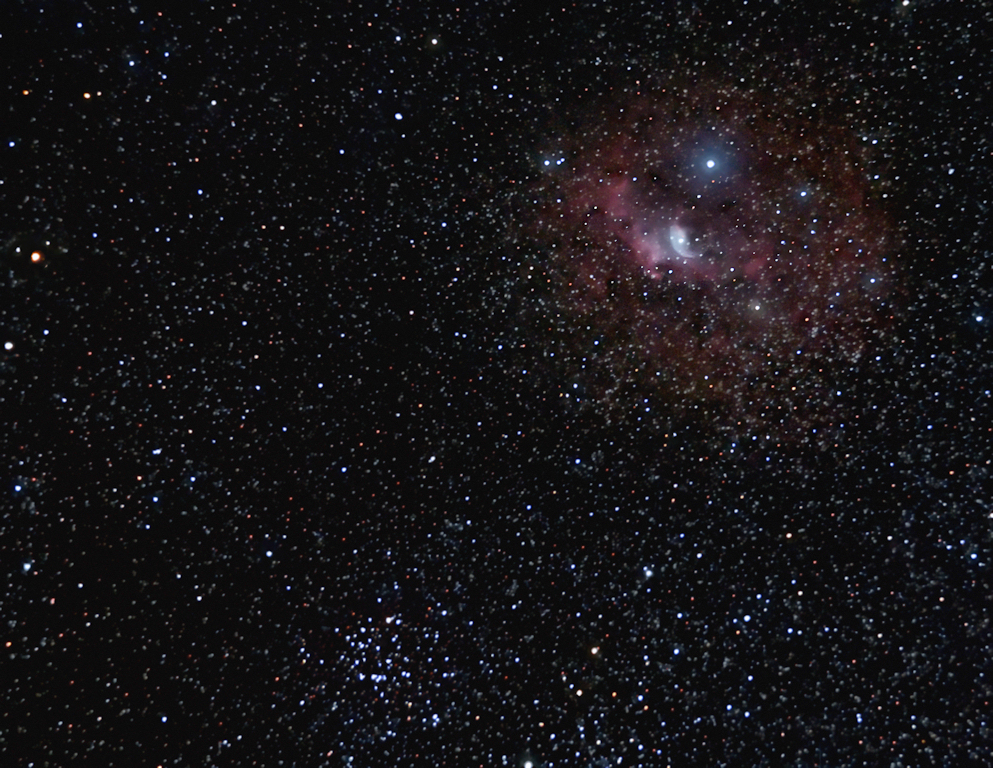
Calibration and stacking done with Images Plus. This
image was saved as an eight bit JPEG to keep the stars small. Next
digital development processing was used to greatly stretch the image
and this was then also saved as a JPEG. The stretched image
was loaded into Paint Shop Pro and the stars were separated from the rest of the
image. SIM (screen inverted mask)
processing was applied to this DSO layer to enhance the faint
nebulousity. A curves layer was used to increase the contrast of the
SIM processed layer. Next, background
correction and noise reduction was
applied. The first stored JPEG was loaded as the star layer.
The star colour was enhanced. A slight tracking
error was removed from the star layer. Finally
the star and DSO layers were recombined to produce the final image.
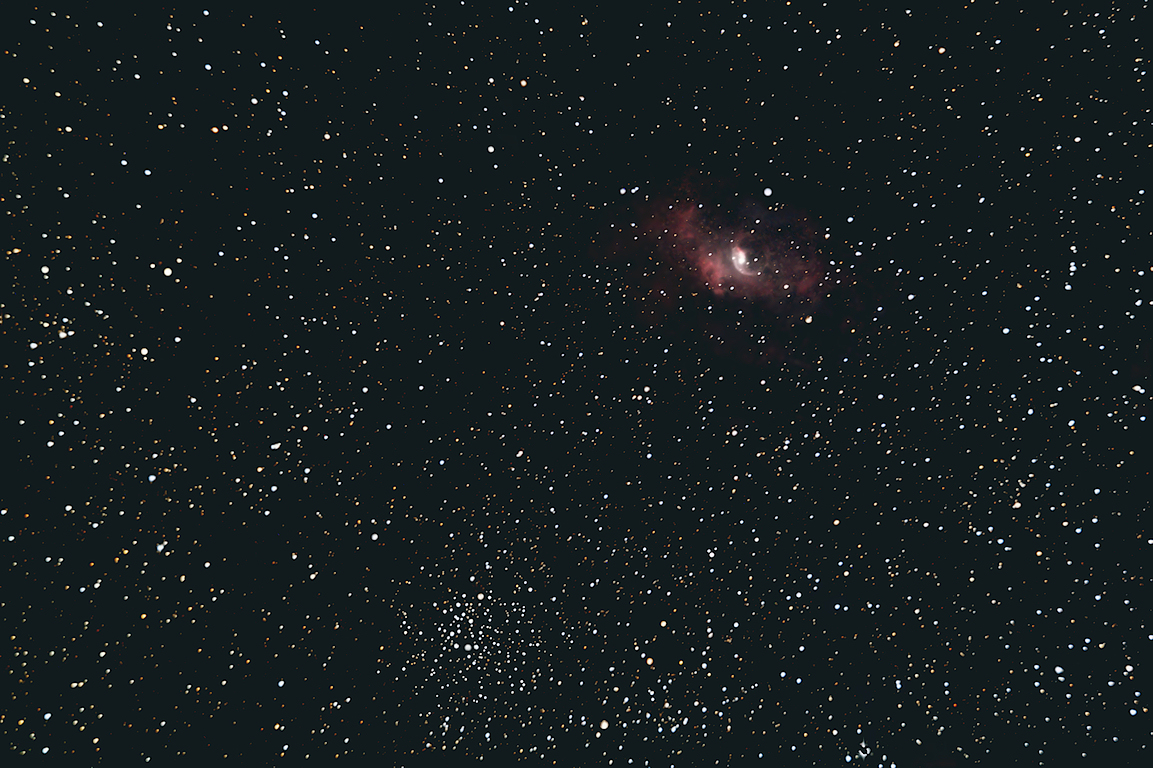
All this processing reviels the bubble much better
than
my original attempt. There is more faint detail and the star colour is
greatly enhanced. The down side is a few fuzzy stars as I got lazy in
cleaning up after eroding away most of the stars in the DSO layer. All
in all, not bad for a 25 minute exposure taken with an unmodified Canon
DSLR.
This redo of the processing was prompted by an
excellent
wide field shot taken by Chuck Kimball of the same area. Chuck's shot
was a guide to what was nebula and what was simply noise. Chuck's image
can be viewed here.
|