
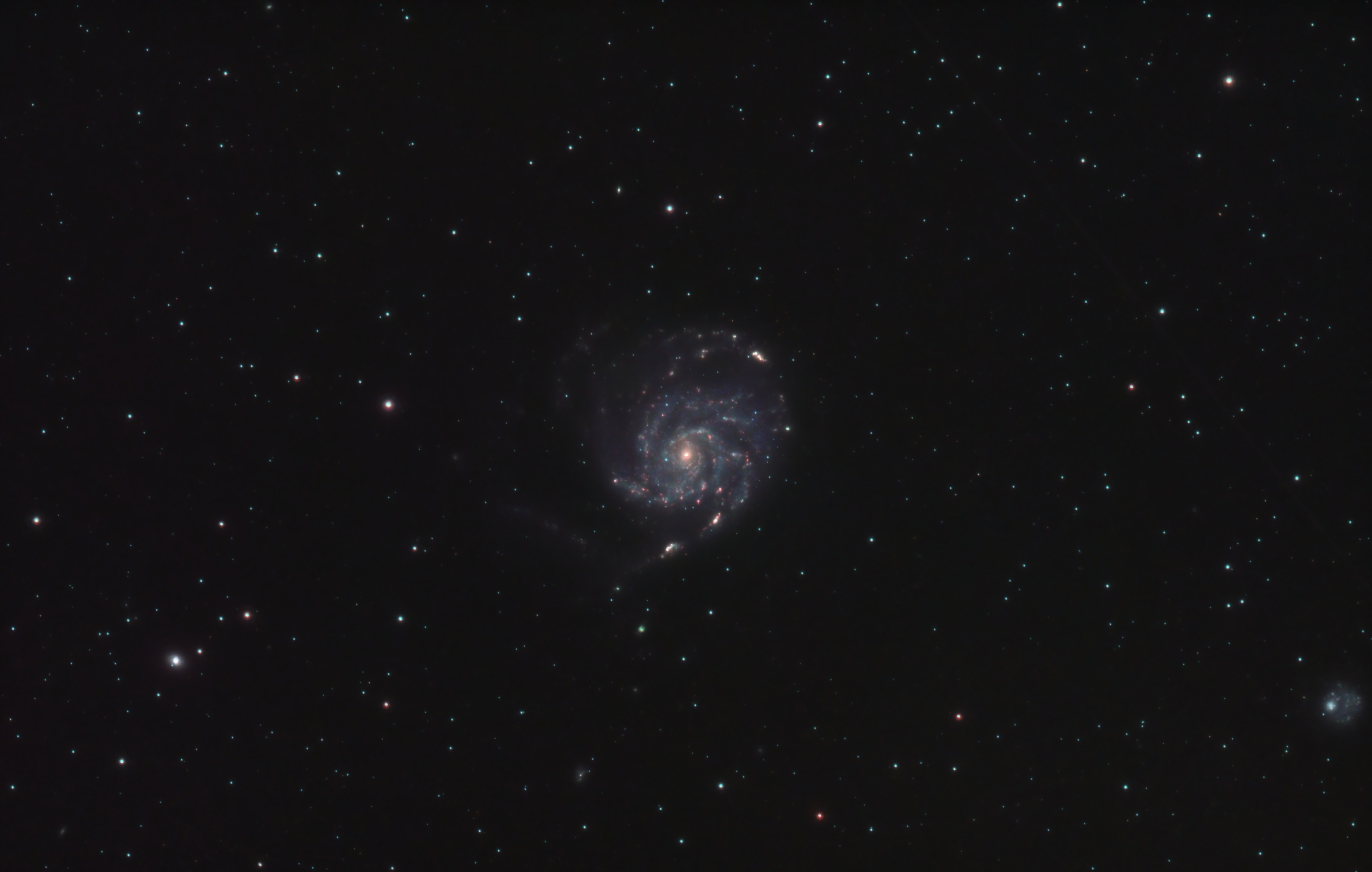
| This one is an
experiment in using my Optolong L-eNhance filter on an wideband
object. The filter works miracles on narrow band targets like
planetary and emission nebulae, so I was curious how it would do on a
wideband target like galaxies. The jury is still out as the filter
played havoc with the colour balance. It really made the H alpha
emission regions pop, so much so that I had to tone them down a lot to
look close to reasonable. A lot of the core detail is gone as well with
the fine lines seemingly removed by the filter - this shot is a
good example of the detail that seems to be blocked by the filter.
Still this isn't too bad for an urban shot taken under light polluted
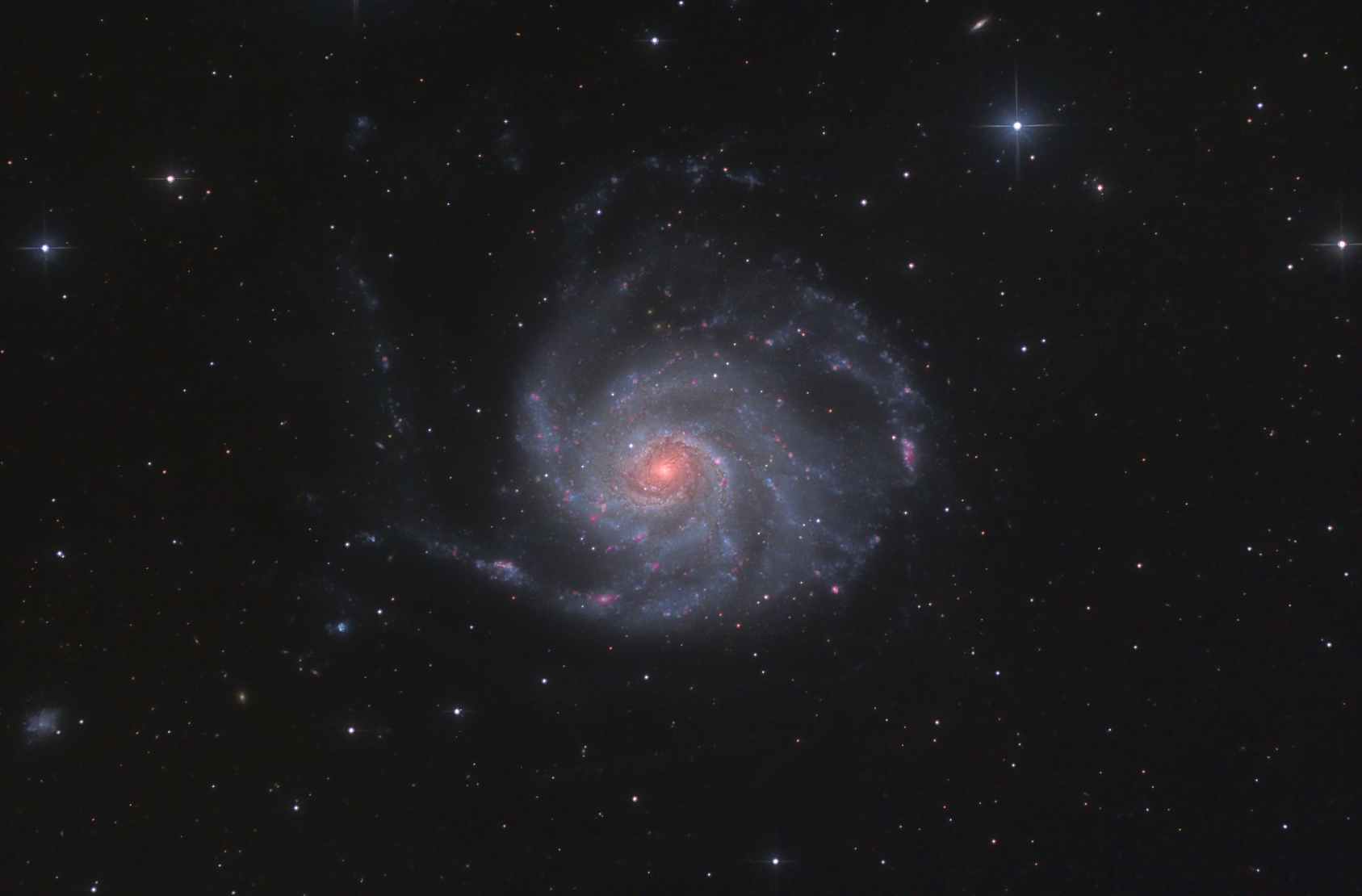
skies. Scroll down for a colour combination of this shot with my RGB
data to make the hydrogen alpha regions show up better and keep the
detail from the dark sky RGB data. According to Wikipedia - The Pinwheel Galaxy (also known as Messier 101, M101 or NGC 5457) is a face-on spiral galaxy 21 million light-years (6.4 megaparsecs) away from Earth in the constellation Ursa Major. It was discovered by Pierre Méchain in 1781 and was communicated that year to Charles Messier, who verified its position for inclusion in the Messier Catalogue as one of its final entries. Click on the either image to see a higher resolution version, click again to return to this page. |
||||||||||||||||||||
 |
||||||||||||||||||||
 |
||||||||||||||||||||
|