
| I've been having some issues with slight
star trailing caused by my mount's RA drive. The fix was to set the
gear tension correctly as it seems to have tightened up slightly over
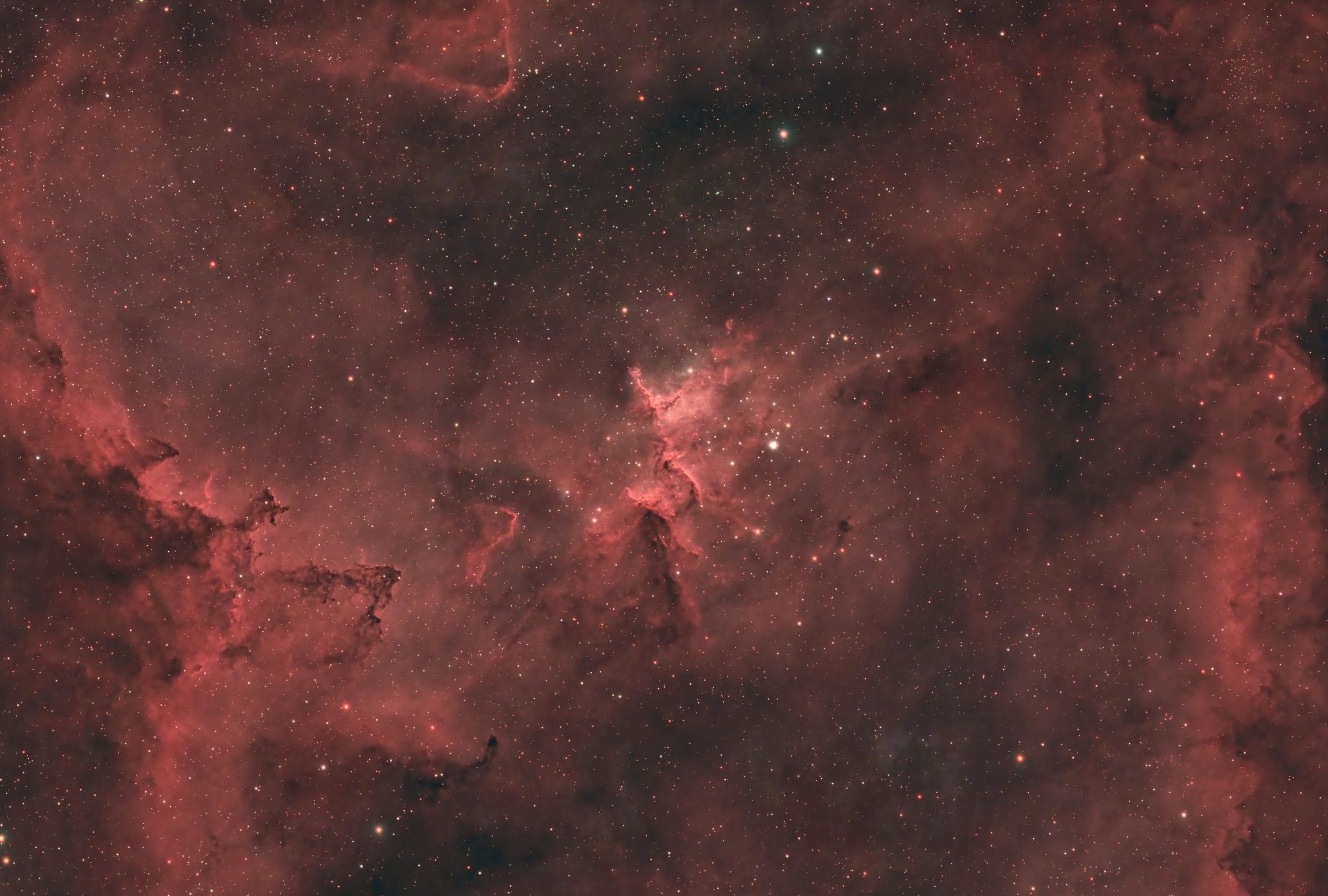
the years. During testing I took an hours worth of data on the Heart
Nebula. From the look of the stars in this image I think I have the
problem fixed. This shot shows what you can do with a relatively short
exposure, even from an urban location. According to Wikipedia - The Heart Nebula, IC 1805, Sharpless 2-190, lies some 7500 light years away from Earth and is located in the Perseus Arm of the Galaxy in the constellation Cassiopeia. It was discovered by William Herschel on 3 November 1787. It is an emission nebula showing glowing ionized hydrogen gas and darker dust lanes. I have shot this area before from the same location with a Canon 60Da DSLR on the same scope. That image is here and shows how camera technology has improved in the time between purchasing the DSLR and the much newer Zwo ASI2600 MC. Note the exposure used whit each camera. Click on the image to see a higher resolution version of the data and click again to return to this page. |
||||||||||||||||||||
 |
||||||||||||||||||||
|