
| This is a redo of a test shot using
a mini computer to
control my entire system. Usually I use a Windows tablet but I wanted
something that didn't have a battery that could get damaged by the cold
temperatures during winter imaging. This is an urban shot with 2.5
hours of exposure using a L-eNhance light polution filter from
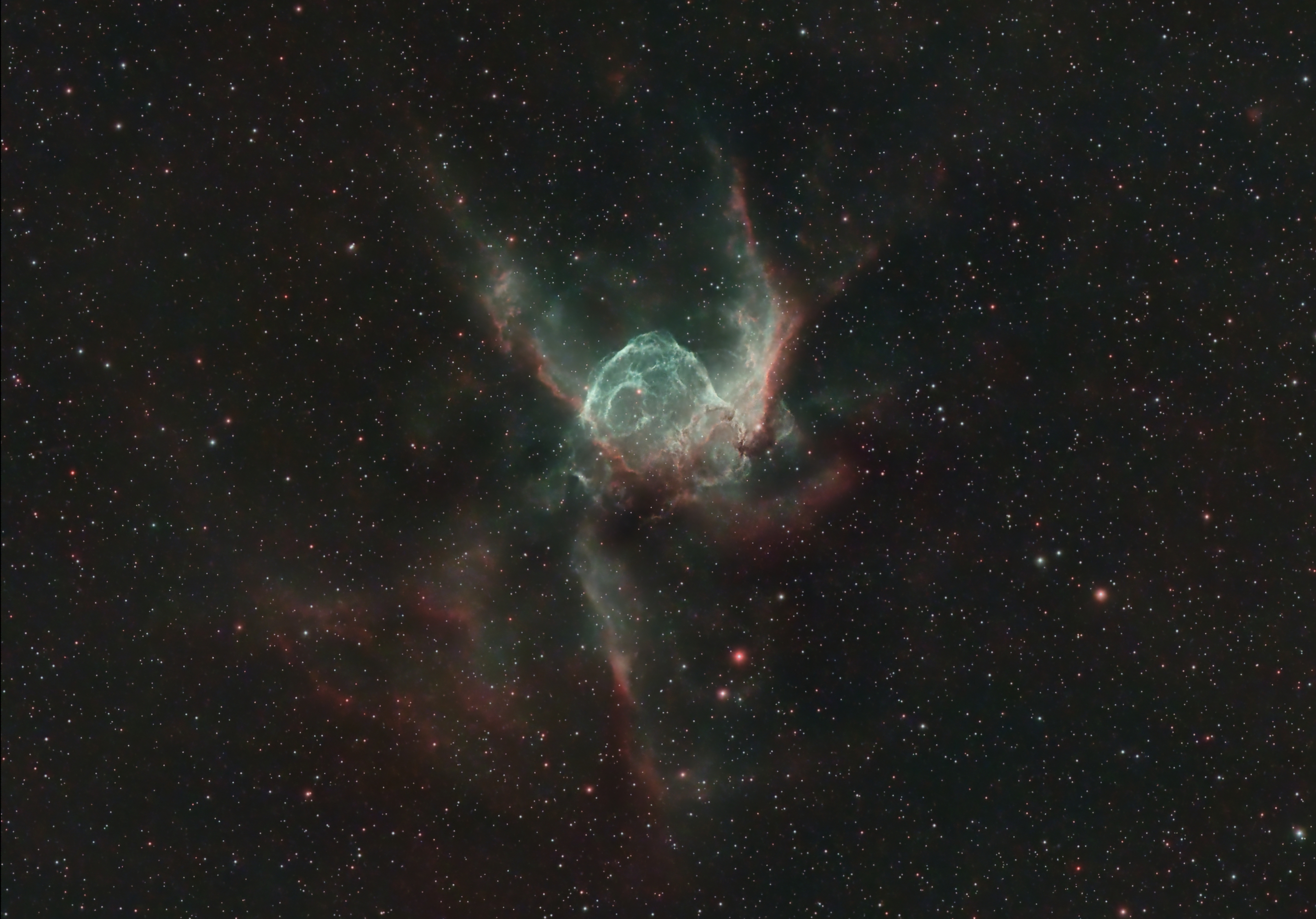
Optolong, and an quad core i5 mini computer to control the system. According to Wikipedia - NGC 2359 (also known as Thor's Helmet) is an emission nebula in the constellation Canis Major. The nebula is approximately 3,670 parsecs (11.96 thousand light years) away and 30 light-years in size. The central star is the Wolf-Rayet star WR7, an extremely hot star thought to be in a brief pre-supernova stage of evolution. It is similar in nature to the Bubble Nebula, but interactions with a nearby large molecular cloud are thought to have contributed to the more complex shape and curved bow-shock structure of Thor's Helmet. Click on the image to see a higher resolution version, click again to return to this page. |
||||||||||||||||||||
 |
||||||||||||||||||||
|