
| Here is my first test
shot using a new Optolong
L-eNhance light pollution filter taken from my urban driveway.
This shot was
taken
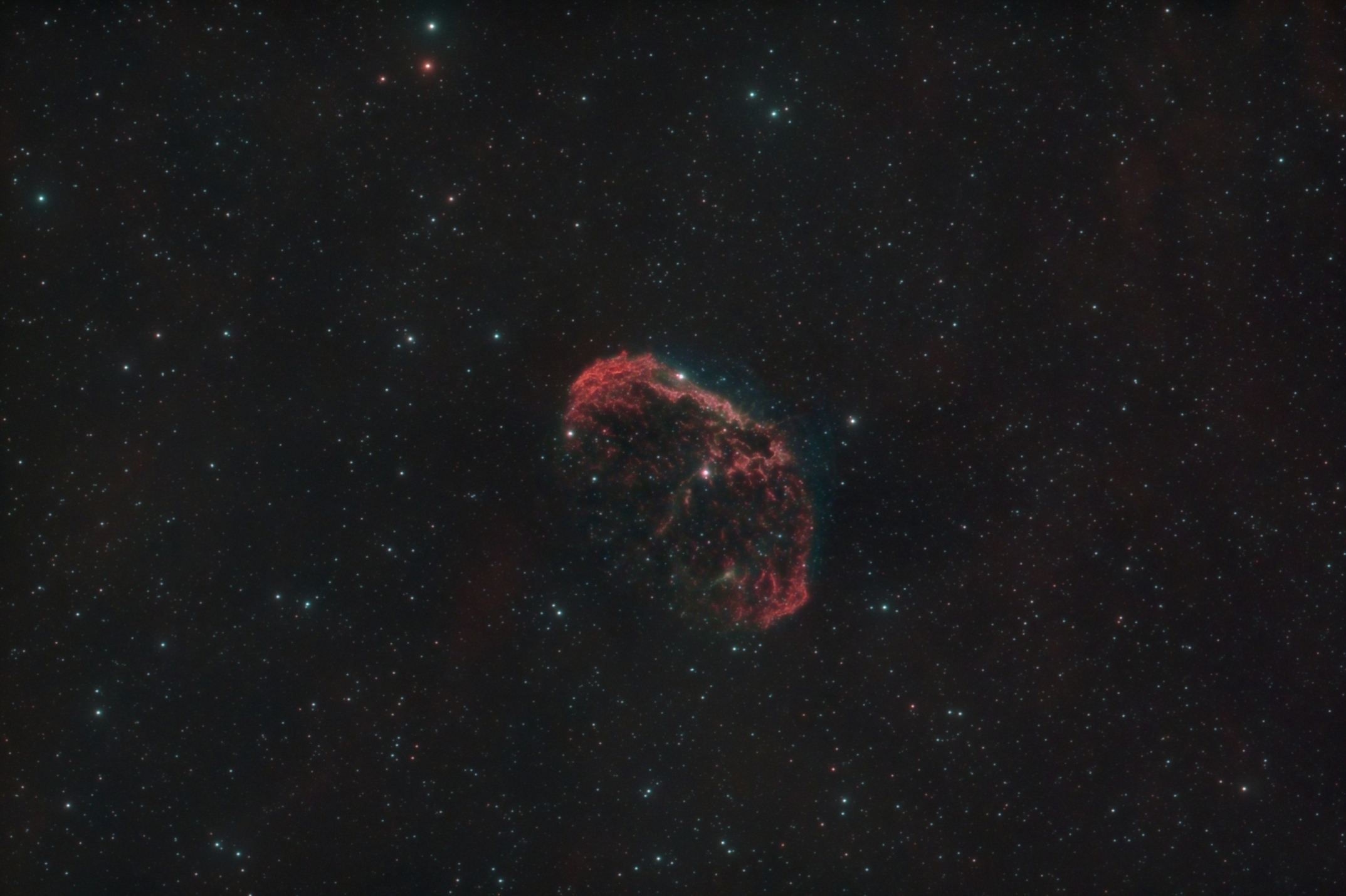
looking over my house into urban light pollution. The second image is
an unfiltered version taken under similar conditions a year ago for
comparison. Click on the first filtered image to see a zoom to 50 percent for more
detail. Click again on the image to return to this page. I wanted to try some narrow band imaging and several friends have had great success with this filter. The clouds moved in before I could get much data so I had to be content with a total of 25 minutes of exposure. This is far too little data to fairly evaluate this filter, but here are some initial impressions. Since I already had a Crescent Nebula image taken last year under virtually identical conditions, I decided to use it as a comparison image and shot the same target with the filter in place. First, let me say there is no doubt that the filtered data was easier to process, the stars were somewhat suppressed and the data easier to stretch without being overwhelmed by the star field. The nebula colour is quite reasonable, there is a slight enhancement of the faint blue stars, but overall the star colour is quite acceptable. After applying the same arcsinh stretch to both images, the filtered version is slightly sharper and the data had a background SNR of 17 while the longer unfiltered exposure had a value of 24. Longer sub-exposures would help here, but at the expense of star colour so I will likely increase the number of subs to overcome the problem. Simply adding more data to the filtered version, totaling up to 60 minutes, should make the background SNR approximately the same as the unfiltered version. Update With a clear evening I managed to get another hour on this target with the filter in place and I'm pleased to report that the additional exposure did what was expected, improving the SNR and allowing a more aggressive stretch. So far I'm quite pleased with the filter. It preservers a more natural colour balance than other light pollution filters I have tried in the past and the narrow pass bands suppresses stars nicely, making images much easier to process. Another Update A friend was over last week to pick up his hand controller that I was fixing. He was also working on this target and wanted to know how to bring out the faint blue halo around the nebula. After showing him how to do it in Images Plus I decided to give it a go on my own data. The result is a little over stretched for my tastes, but it turned out reasonably well. Click on the image to see a zoom of the image and click again to return to this page. |
||||||||||||||||||||
 |
||||||||||||||||||||
| Filtered image | ||||||||||||||||||||
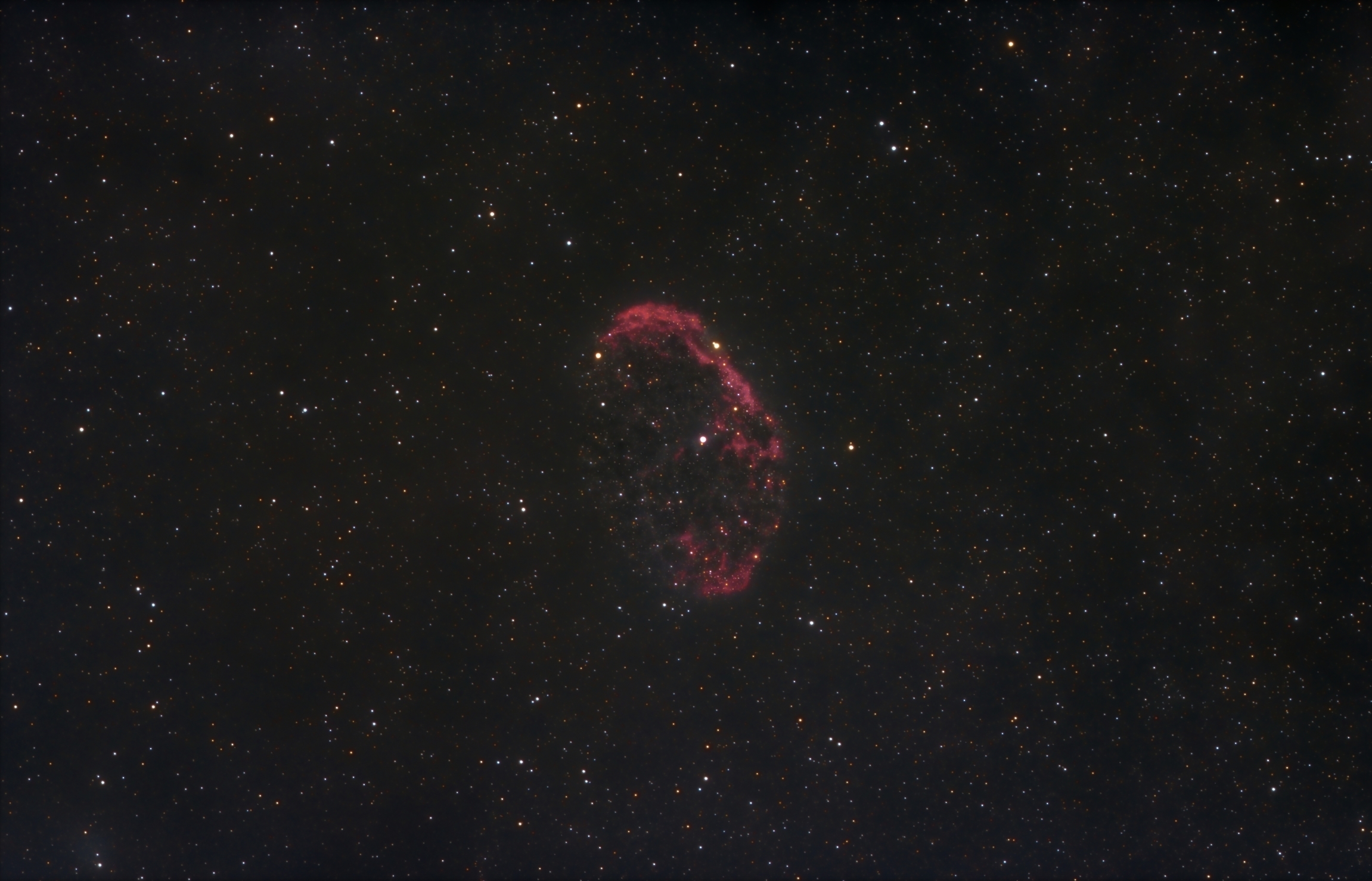 | ||||||||||||||||||||
| Unfiltered image | ||||||||||||||||||||
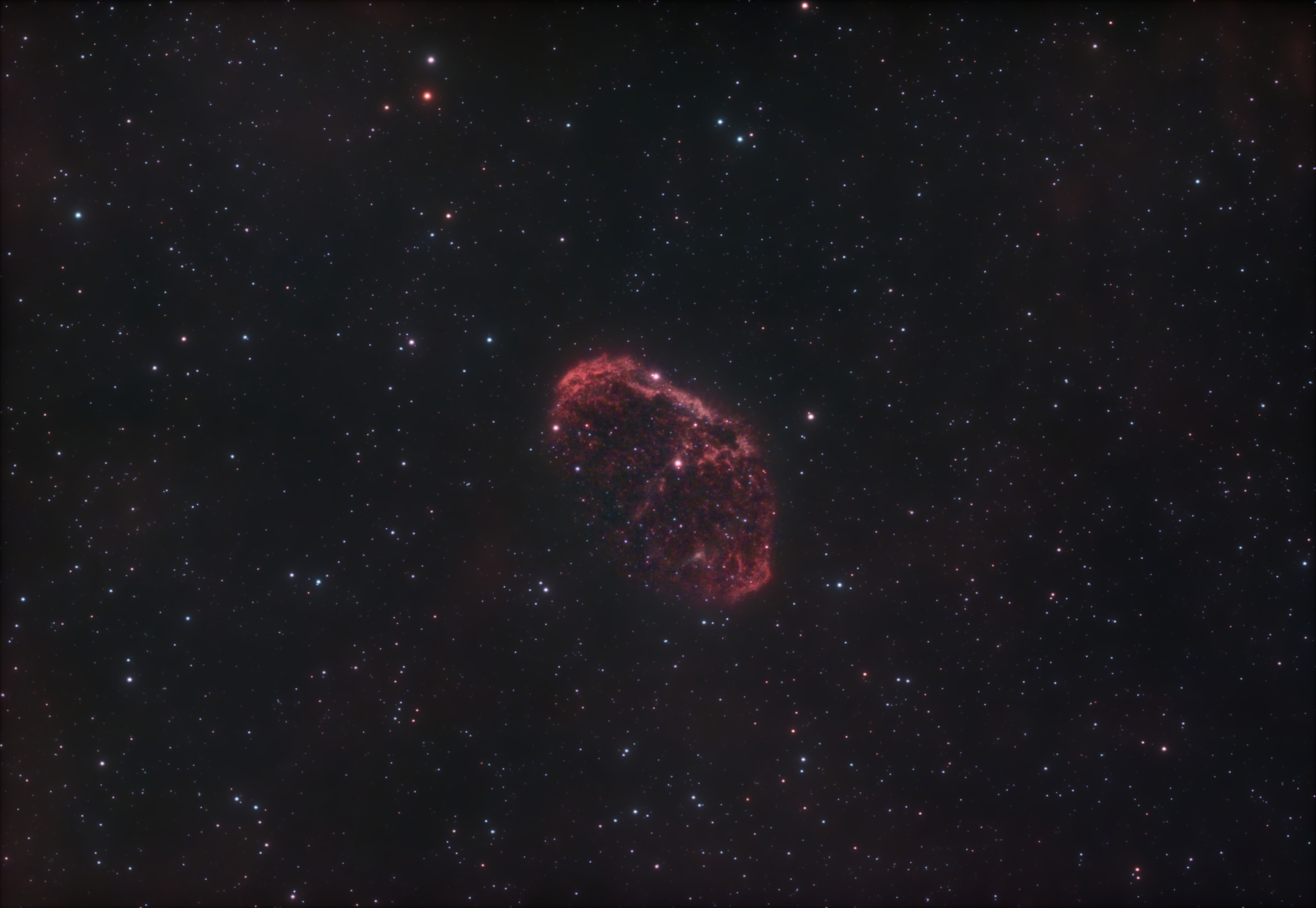 | ||||||||||||||||||||
| Filtered 25 minute exposure | ||||||||||||||||||||
|